The Old Testament mentions dozens of pagan gods alongside the God of Israel, creating questions for modern readers about why these foreign deities appear throughout biblical texts. This exploration is designed for Bible students, history enthusiasts, and anyone curious about the religious landscape of ancient times who wants to understand how pagan influences shaped biblical narratives.
Ancient Israel existed surrounded by cultures worshiping gods like Baal, Asherah, and Molech. The biblical writers didn’t ignore these competing religions—they directly addressed them, sometimes incorporating pagan elements into their own stories, and always responded to the spiritual challenges these gods represented.
We’ll examine the religious context of the ancient Near East to understand why pagan gods mattered so much to biblical authors. You’ll discover specific examples of foreign gods mentioned by name in Scripture and learn how subtle pagan elements found their way into biblical stories. We’ll also explore how Old Testament writers strategically responded to these competing religious influences to establish the uniqueness of their own faith.
Understanding Pagan Religious Context in Ancient Near East
Polytheistic belief systems surrounding ancient Israel
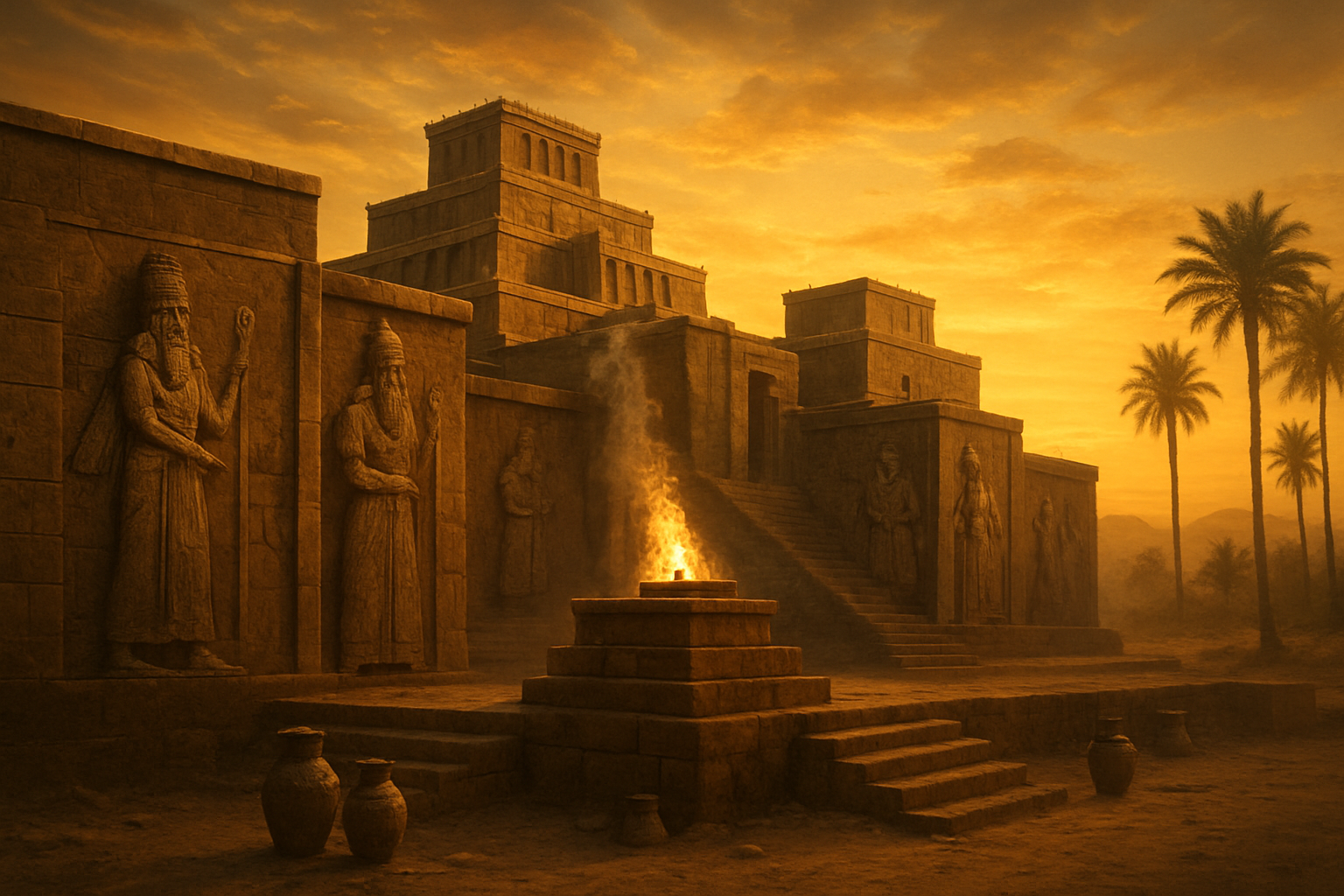
Ancient Israel existed in a world absolutely saturated with gods. Every nation, city, and tribe had their own pantheon of deities, each governing different aspects of life, nature, and human experience. The ancient Near East operated on a fundamentally different religious framework than monotheism – multiple gods weren’t just accepted, they were expected and necessary.
These polytheistic systems typically organized deities in hierarchical structures, with supreme gods ruling over lesser ones. Most cultures recognized a chief deity who governed the heavens, alongside gods of war, fertility, wisdom, and the underworld. Each god had specific domains, personalities, and relationships with other divine beings, creating complex mythological narratives that explained everything from seasonal changes to military victories.
The Mesopotamian pantheon included hundreds of deities, while Egyptian religion featured an equally impressive roster of gods with animal heads, human bodies, and supernatural powers. Canaanite religion, perhaps most relevant to Israel’s context, centered around fertility and agricultural cycles, with gods who died and resurrected annually to ensure crop success.
Common deities worshipped by neighboring civilizations
Several major deities dominated the ancient Near Eastern landscape, each wielding significant influence across multiple cultures. Baal, the Canaanite storm and fertility god, ranked among the most powerful, controlling rain, agriculture, and sexual fertility. His worship involved elaborate rituals designed to ensure successful harvests and human reproduction.
| Deity | Culture | Domain | Significance |
|---|---|---|---|
| Baal | Canaanite | Storm, fertility | Agricultural prosperity |
| Marduk | Babylonian | Creation, justice | National patron |
| Molech | Ammonite | War, sacrifice | Child sacrifice rituals |
| Asherah | Various | Motherhood, sea | Fertility goddess |
| Dagon | Philistine | Grain, agriculture | Harvest success |
Marduk served as Babylon’s patron deity, celebrated annually during the New Year festival when his creation myth was recited. Molech demanded the ultimate sacrifice – children burned alive to secure military victory or divine favor. Asherah, often depicted as a sacred tree or pole, represented feminine fertility and was worshipped alongside Baal in many locations.
Dagon governed grain production among the Philistines, while Chemosh ruled as Moab’s national god. These deities weren’t abstract concepts but active participants in daily life, requiring constant attention, offerings, and ritual observance.
Religious practices and rituals of pagan cultures
Pagan worship involved intensely physical and emotional experiences designed to connect worshippers with divine power. Temple prostitution served both religious and economic functions, with sexual acts performed to ensure fertility for crops, livestock, and families. These weren’t casual encounters but sacred rituals conducted by trained temple personnel.
Animal sacrifice formed the backbone of most pagan religious systems. Priests slaughtered bulls, sheep, goats, and doves on elaborate altars, burning portions for the gods while distributing meat to worshippers. Blood was considered especially powerful, often sprinkled on altars, worshippers, or sacred objects to transfer divine energy.
Child sacrifice represented the most extreme form of religious devotion. Archaeological evidence from sites like Carthage reveals thousands of infant bones in burial urns, suggesting regular practice of this horrific ritual. Parents believed sacrificing their children would earn divine favor during crises, plagues, or military threats.
Festival celebrations marked seasonal transitions with elaborate processions, dramatic reenactments of mythological stories, and community feasting. These events strengthened social bonds while honoring the gods responsible for cosmic order and natural cycles.
Political and social influence of pagan religions
Religion and politics were inseparable in the ancient world. Kings derived their authority from divine appointment, often claiming direct descent from gods or serving as their earthly representatives. This divine mandate justified their rule while making rebellion equivalent to defying the gods themselves.
National deities served as supernatural military commanders, leading armies into battle and determining victory or defeat. Conquered peoples were expected to acknowledge their conquerors’ gods as superior, often adopting new religious practices alongside their native traditions. Religious conversion frequently accompanied political submission.
Temple complexes functioned as economic powerhouses, owning vast agricultural lands, controlling trade routes, and employing thousands of priests, craftsmen, and servants. Religious festivals generated enormous revenue as pilgrims traveled great distances to participate, purchasing animals for sacrifice, food, lodging, and religious artifacts.
Marriage alliances between royal families typically involved religious accommodation, with foreign wives bringing their native gods into new kingdoms. These diplomatic marriages created religious syncretism, blending different mythologies and ritual practices into hybrid systems that reflected political realities while maintaining cultural identities.
Direct References to Foreign Gods in Old Testament
Baal worship and its condemnation
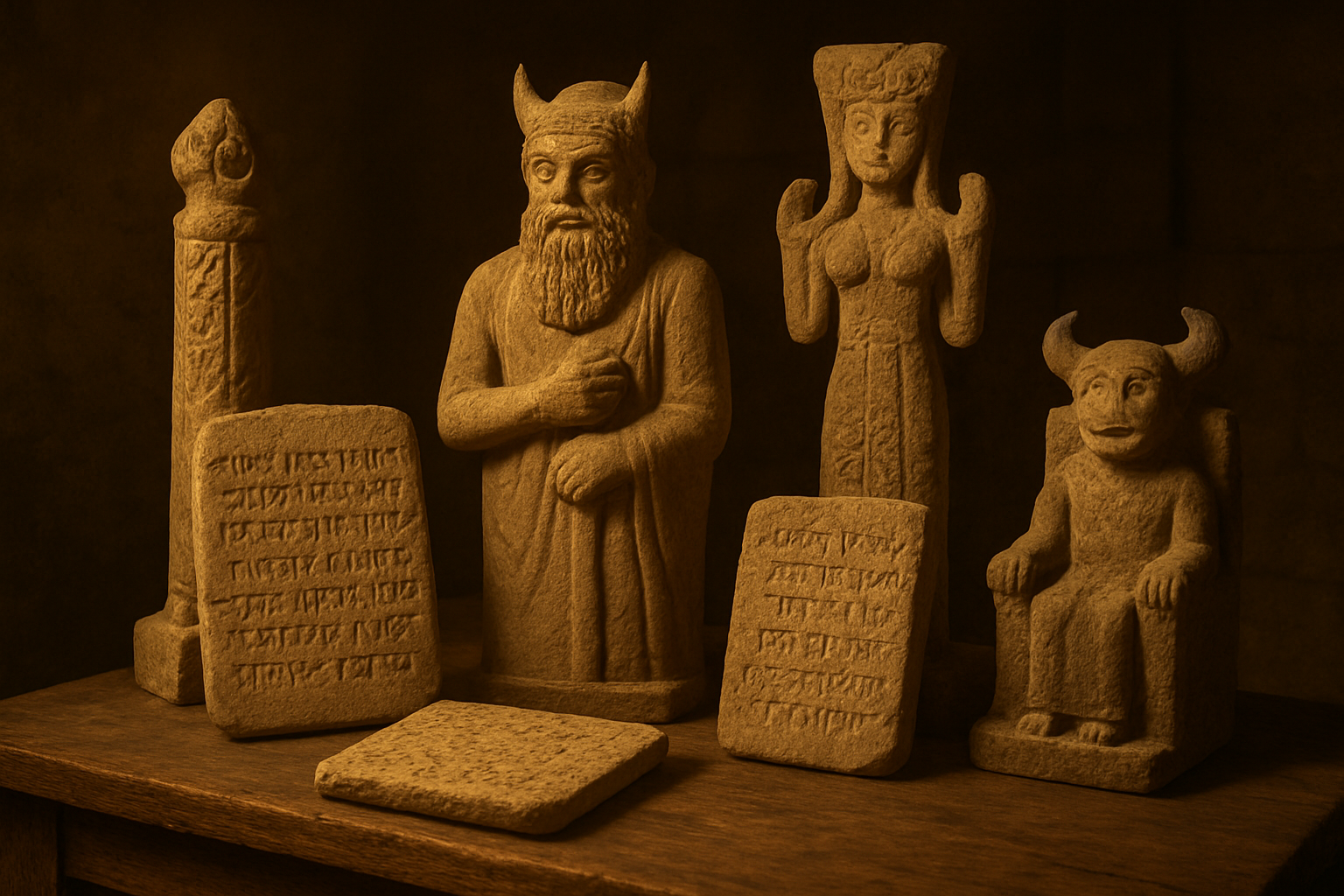
The Old Testament repeatedly mentions Baal, a Canaanite storm and fertility god whose worship posed a constant threat to Israelite monotheism. Baal’s name appears over 80 times throughout biblical texts, often in contexts of fierce divine condemnation. The prophet Elijah’s dramatic confrontation with 450 prophets of Baal on Mount Carmel stands as one of the most vivid demonstrations of this religious conflict (1 Kings 18:20-40).
Baal worship involved elaborate rituals at high places called “bamot,” where devotees believed the storm god controlled rainfall and agricultural prosperity. The Israelites frequently fell into syncretistic practices, attempting to worship both Adonai (HaShem) and Baal simultaneously. Kings like Ahab and Jezebel actively promoted Baal worship, establishing temples and supporting hundreds of Baal prophets.
Biblical condemnation of Baal worship wasn’t merely theological—it represented a rejection of the entire Canaanite worldview that saw divine power as fragmented among multiple deities. The prophets consistently declared that Adonai (HaShem) alone controlled weather, fertility, and national prosperity, directly challenging Baal’s supposed domains.
Molech and child sacrifice practices
Molech represents one of the most disturbing pagan influences documented in biblical literature. This Ammonite deity demanded the ultimate sacrifice—children burned alive in ritualistic offerings. Archaeological discoveries at sites like Carthage’s tophet have confirmed the historical reality of these horrific practices among ancient Semitic peoples.
Biblical references to Molech appear primarily in Leviticus and Kings, where the practice receives absolute prohibition. The Valley of Hinnom (Gehenna) outside Jerusalem became synonymous with these abominations, where kings like Manasseh “made his son pass through fire” (2 Kings 21:6). The stark language used—”detestable,” “abomination”—reveals the depth of biblical revulsion toward these practices.
Interestingly, some scholars suggest “molech” might refer to a type of sacrifice rather than a specific deity, derived from the Hebrew root meaning “king.” Regardless of the precise interpretation, the biblical text presents these practices as the antithesis of proper worship, representing humanity’s capacity for religious corruption when divine boundaries are abandoned.
Asherah poles and fertility goddess worship
Asherah worship permeated ancient Near Eastern religion as extensively as Baal worship, yet often receives less attention in modern discussions. This Canaanite mother goddess, sometimes called “Queen of Heaven,” was represented by wooden poles or living trees that became focal points for fertility rituals. Archaeological evidence from sites like Kuntillet Ajrud has even revealed inscriptions mentioning “Adonai (HaShem) and his Asherah,” suggesting some Israelites attempted to incorporate the goddess into their worship of the God of Israel.
The biblical response to Asherah worship was consistently hostile. Reforming kings like Hezekiah and Josiah specifically targeted Asherah poles for destruction (2 Kings 18:4, 23:6). The goddess represented everything biblical monotheism opposed—sexual fertility rites, polytheistic worldviews, and the deification of natural forces.
Asherah poles weren’t mere symbols but active cult objects where worshippers engaged in ritualistic prostitution, believing sexual acts would ensure agricultural and human fertility. The biblical prohibition against these practices protected Israelite society from the social chaos and moral degradation that accompanied such religious systems.
Golden calf incident and Egyptian influences
The golden calf episode at Mount Sinai reveals how quickly the Israelites reverted to familiar Egyptian religious patterns despite witnessing miraculous divine interventions. The calf likely represented Apis, the sacred bull worshipped in Memphis, or Mnevis from Heliopolis—both prominent in Egyptian religion during Israel’s bondage period.
Aaron’s role in crafting the idol demonstrates how even religious leadership could succumb to pagan influences under pressure. The people’s declaration, “These are your gods, O Israel, who brought you up out of Egypt” (Exodus 32:4), shows their attempt to transfer Adonai (HaShem)’s attributes to a familiar Egyptian symbol.
Jeroboam’s later establishment of golden calves at Dan and Bethel (1 Kings 12:28-30) proves this Egyptian influence persisted throughout Israelite history. His justification echoed the Sinai incident almost verbatim, suggesting these pagan symbols held enduring appeal for people seeking tangible representations of divine power.
The golden calf incidents reveal a fundamental tension between Adonai (HaShem)’s invisible, transcendent nature and human desire for visible, manageable deities. Egypt’s animal-centered religion provided exactly what the Israelites craved—gods they could see, touch, and control through ritual manipulation.
Subtle Pagan Elements Incorporated into Biblical Narratives
Divine Council Imagery
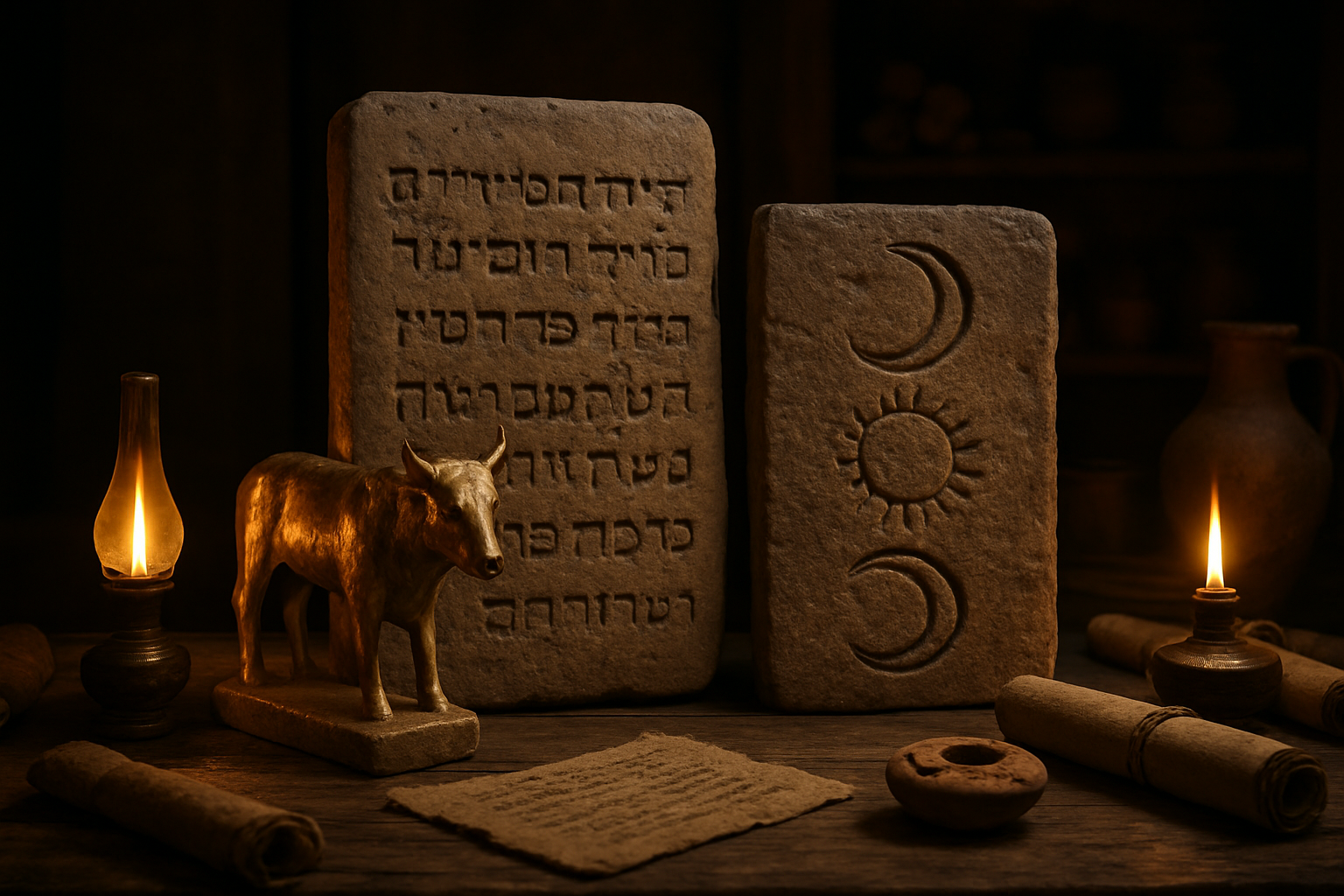
The Old Testament contains striking parallels to Canaanite divine council scenes, where a supreme deity presides over an assembly of lesser gods. Psalm 82 presents one of the clearest examples, depicting God standing in the “divine assembly” and judging among the “gods.” This imagery directly mirrors Canaanite texts describing El’s heavenly court, where the patriarch god ruled over the pantheon.
Job’s opening chapters showcase another divine council scene, with “sons of God” presenting themselves before Adonai (HaShem). The Hebrew term “bene elohim” echoes Canaanite literature’s descriptions of divine beings attending El’s assemblies. The adversary (Satan) appears as one member of this celestial court, functioning similarly to divine messengers in Ugaritic texts who report earthly activities to the supreme deity.
First Kings 22 features the prophet Micaiah describing a vision of God’s heavenly throne room, complete with the “host of heaven” standing around the divine throne. This scene bears remarkable resemblance to Canaanite depictions of El’s council chamber. The discussion among divine beings about how to deceive Ahab parallels decision-making processes found in ancient Near Eastern mythological texts.
These borrowings weren’t accidental literary choices. Hebrew writers deliberately adapted familiar religious imagery to communicate theological concepts to audiences already familiar with Canaanite religious traditions, while simultaneously asserting Adonai (HaShem)’s supreme authority over all divine beings.
Creation Account Parallels with Mesopotamian Stories
Genesis shares significant structural and thematic elements with Mesopotamian creation narratives, particularly the Enuma Elish and Atrahasis epic. Both traditions begin with watery chaos – Genesis opens with “the deep” (tehom), which linguistically connects to Tiamat, the primordial chaos monster in Babylonian mythology.
The sequence of creation events shows remarkable similarities across cultures. Both traditions describe the separation of waters, the establishment of firmament, and the ordering of celestial bodies. The Mesopotamian accounts often involve combat between order-bringing deities and chaos forces, while Genesis presents a more peaceful divine command bringing order from disorder.
The creation of humanity presents another parallel worth examining. In both traditions, humans are formed from earthly materials and receive divine breath or essence. Mesopotamian texts describe gods creating humans to serve as workers for the divine realm, while Genesis presents humanity as image-bearers with dominion responsibilities.
| Genesis Elements | Mesopotamian Parallels |
|---|---|
| Watery chaos (tehom) | Tiamat (chaos waters) |
| Divine word creating | Divine action/combat |
| Seven-day structure | Seven tablets of creation |
| Human from clay | Human from clay and divine essence |
These parallels suggest Hebrew scribes were familiar with widespread ancient creation traditions but adapted them to emphasize monotheistic theology and humanity’s special relationship with the creator.
Combat Myths Reflected in Biblical Poetry
Biblical poetry preserves echoes of ancient combat myths where divine warriors battle chaos monsters representing primordial disorder. Psalm 74 describes God crushing Leviathan’s heads and feeding the creature to desert animals. This imagery parallels Canaanite stories of Baal’s victory over the sea monster Lotan, demonstrating how Hebrew poets borrowed mythological motifs to celebrate Adonai (HaShem)’s power.
Isaiah 27 promises God’s future judgment on “Leviathan the fleeing serpent” and “the dragon that is in the sea.” This language draws from well-established ancient Near Eastern traditions depicting divine-monster conflicts. The prophet transforms these mythological elements into eschatological promises about God’s ultimate victory over evil forces.
Job 41 provides an extended description of Leviathan’s fearsome power, emphasizing that only God can control such a creature. The text reads like a bestiary entry for a mythological monster, complete with fire-breathing capabilities and impenetrable armor. This presentation serves theological purposes, magnifying God’s supreme authority over forces that terrified ancient imaginations.
Psalm 89 celebrates God’s rule over the “raging sea” and victory over “Rahab,” another name for the chaos monster. The psalm connects these mythological victories to God’s covenant faithfulness with David’s dynasty. By linking creation-time triumphs over chaos with ongoing political promises, Hebrew poets demonstrated how ancient mythological patterns continued to provide meaning for contemporary experiences.
These combat myth references weren’t primitive superstitions but sophisticated literary devices that communicated profound theological truths about divine sovereignty and cosmic order.
Old Testament’s Response to Pagan Influences
Prophetic Denunciations of Idol Worship
The Old Testament prophets consistently spoke out against Israel’s tendency to worship foreign gods, using powerful imagery and harsh warnings to communicate God’s displeasure. Jeremiah compared Israel’s unfaithfulness to that of an adulterous wife, while Hosea used his own marriage to an unfaithful woman as a living parable of Israel’s spiritual adultery. Ezekiel described in vivid detail the abominations he witnessed in the temple, including women weeping for the Mesopotamian god Tammuz and men worshipping the sun with their backs turned to the holy place.
Isaiah mocked the absurdity of idol worship, describing how craftsmen would cut down a tree, use half the wood to cook their meals, and fashion the other half into a god to worship. These prophetic voices weren’t just theological statements—they were urgent calls for national repentance that often predicted specific consequences for continued disobedience.
The prophets also exposed the emptiness of pagan rituals, contrasting the living God who created the heavens and earth with lifeless statues that couldn’t speak, see, or act. Their denunciations weren’t merely religious criticism but served as powerful reminders of the covenant relationship between Adonai (HaShem) and his chosen people.
Reforms Undertaken by Righteous Kings
Several Old Testament kings led significant religious reforms to purge pagan influences from Judah and Israel. King Hezekiah destroyed the bronze serpent that Moses had made in the wilderness because the people had begun burning incense to it, treating it as an idol. He also removed the high places, smashed sacred stones, and cut down Asherah poles throughout the kingdom.
King Josiah’s reforms were even more comprehensive. After discovering the Book of the Law during temple renovations, he embarked on a sweeping campaign to eliminate pagan worship. He demolished the high places where previous kings had burned incense to Baal, the sun, moon, and constellations. Josiah also removed the horses that previous kings had dedicated to the sun god and burned the chariots dedicated to solar worship.
| King | Key Reform Actions | Biblical Reference |
|---|---|---|
| Asa | Removed foreign altars and high places | 2 Chronicles 14:3 |
| Hezekiah | Destroyed bronze serpent, removed Asherah poles | 2 Kings 18:4 |
| Josiah | Comprehensive purge of pagan sites and practices | 2 Kings 23:4-20 |
These reforms often faced resistance from both religious leaders and common people who had grown comfortable with syncretic practices that blended Adonai (HaShem) worship with pagan elements.
Exile as Consequence for Embracing Foreign Gods
The ultimate consequence for Israel’s persistent adoption of foreign gods was exile—first for the northern kingdom of Israel in 722 BCE, then for Judah in 586 BCE. The biblical narrative presents these catastrophic events not as mere political defeats but as divine judgment for covenant unfaithfulness.
The Assyrian conquest of Israel scattered the ten northern tribes, effectively ending their distinct identity. The Babylonian exile of Judah, while devastating, proved more redemptive in the long run. During their seventy years in Babylon, the Jewish people underwent a profound theological transformation. They abandoned idol worship permanently and developed a deeper understanding of monotheism.
The exile experience taught hard lessons about the consequences of spiritual compromise. Books like Daniel and Esther show how faithful Jews maintained their identity while living under foreign rule, refusing to bow to pagan gods even when facing death. This period of suffering and reflection shaped Jewish identity for centuries to come and prepared the way for a more purified worship when they returned to the land.
Calls for Exclusive Worship of Adonai (HaShem)
Central to the Old Testament’s response to pagan influences was the repeated call for exclusive devotion to Adonai (HaShem) alone. The Shema, found in Deuteronomy 6:4-5, declared that “the Lord our God, the Lord is one” and commanded total love and loyalty to him alone. This wasn’t just about avoiding other gods—it was about recognizing Adonai (HaShem) as the only true God worthy of worship.
The first commandment explicitly forbade having other gods, while the second prohibited making idols or images for worship. These commands directly challenged the polytheistic worldview that surrounded Israel, where multiple gods were worshipped for different purposes and seasons.
Biblical writers consistently emphasized that Adonai (HaShem) was not just Israel’s tribal deity but the Creator of the universe who controlled all nations and natural forces. Psalms like Psalm 96 called on all nations to recognize Adonai (HaShem)’s supremacy over the false gods of the peoples. The exclusive claims for Adonai (HaShem) reached their peak in texts like Isaiah 45:5-6, where God declares through the prophet: “I am the Lord, and there is no other; apart from me there is no God.”
Archaeological Evidence Supporting Biblical References
Ancient inscriptions mentioning pagan deities
Archaeologists have uncovered countless inscriptions across the ancient Near East that directly name the gods mentioned in the Old Testament. The Ugaritic texts from Ras Shamra, dating to the 14th-12th centuries BCE, provide extensive documentation of Baal worship, complete with detailed mythological narratives that mirror some biblical themes. These clay tablets describe Baal’s battles with Yamm (the sea god) and Mot (death), offering crucial context for understanding why biblical authors so vehemently opposed Baal worship.
The Mesha Stele, discovered in Jordan in 1868, mentions Chemosh, the Moabite god explicitly referenced in the Old Testament. King Mesha’s inscription boasts about victories achieved through Chemosh’s power, providing an enemy’s perspective on the religious conflicts described in biblical narratives. Similarly, Assyrian and Babylonian royal inscriptions frequently reference Marduk, Ashur, and other deities that appear in biblical prophecies and historical accounts.
Egyptian hieroglyphic texts name numerous gods that Israel encountered during their time in Egypt, including references to divine pharaohs that align with Exodus narratives. The Tel Dan Stele mentions the “House of David,” connecting biblical history with archaeological reality while also referencing foreign religious practices.
Discovered cult objects and religious artifacts
Excavations throughout Israel and surrounding regions have yielded thousands of religious artifacts that illuminate pagan worship practices described in the Old Testament. Bronze figurines of Baal, often depicted holding lightning bolts, have been found in layers dating to the time of the Judges and early monarchy. These discoveries match biblical descriptions of Baal as a storm god whose worship Israel repeatedly adopted.
Asherah figurines and cult stands appear frequently in archaeological contexts, particularly from the 8th-7th centuries BCE. These female figurines, likely representing the Canaanite mother goddess, correspond to biblical references about Asherah poles and the worship of the “Queen of Heaven” mentioned in Jeremiah. Some were even found in Israelite homes, confirming that syncretistic practices penetrated deeply into Jewish society.
Philistine cult objects, including distinctive pottery and religious vessels, have been uncovered at sites like Ekron and Ashkelon. These artifacts help scholars understand the religious context of the Philistine conflicts described in Samuel and Judges. The discovery of a silver amulet at Ketef Hinnom containing text similar to the priestly blessing shows how Israelite religious practices developed alongside, and sometimes in opposition to, surrounding pagan traditions.
Temple remains revealing worship practices
Archaeological excavations have revealed numerous temple complexes that demonstrate how pagan worship functioned in the ancient world. The temple at Arad, dating to the Israelite period, shows evidence of both proper worship according to biblical standards and syncretistic practices that mixed foreign elements with Israelite religion. Horned altars discovered there match biblical descriptions while also showing burn marks from incense offerings that may have included foreign religious practices.
Canaanite high places, or bamot, have been excavated across Israel, revealing circular stone platforms, standing stones (massebot), and altar complexes that match biblical descriptions of forbidden worship sites. These archaeological remains help explain why biblical authors so frequently condemned worship “on every high hill and under every green tree.”
The Philistine temple at Tell es-Safi (biblical Gath) provides insight into the religious context of the Goliath narrative and Philistine culture described in the Old Testament. Excavations revealed a temple layout with distinctive architectural features, cult vessels, and evidence of ritualistic practices that align with biblical descriptions of Philistine religious customs.
Phoenician temples discovered in Lebanon and Syria show similar architectural patterns to Solomon’s temple described in Kings, suggesting shared cultural influences while maintaining distinct religious practices.
Historical records confirming religious conflicts
Assyrian palace reliefs and annals provide detailed accounts of religious conflicts that parallel biblical narratives. The Black Obelisk of Shalmaneser III depicts tribute scenes that likely include representatives from Israel, while royal inscriptions describe campaigns against kingdoms practicing the very religions condemned in the Old Testament.
Neo-Babylonian chronicles document the destruction of Jerusalem and the exile period, confirming the historical context of prophetic warnings about foreign gods and their ultimate powerlessness. These records describe how conquered peoples’ gods were carried off to Babylon, matching biblical accounts of religious humiliation and divine judgment.
Administrative documents from various ancient Near Eastern archives reveal the everyday reality of religious plurality that biblical authors addressed. Contracts, legal documents, and census records show how multiple religious traditions coexisted and competed, creating the exact conditions that prompted biblical warnings against syncretism and idol worship.
Persian period documents, including the Elephantine papyri, show Jewish communities practicing syncretistic religion that combined Adonai (HaShem) worship with other deities, demonstrating the ongoing struggle between pure monotheism and religious accommodation that runs throughout the Old Testament narrative.
The Old Testament’s relationship with pagan gods reveals a complex web of cultural exchange and religious tension in the ancient world. From direct mentions of Canaanite deities like Baal and Asherah to subtle narrative elements borrowed from neighboring mythologies, the biblical texts show clear awareness of surrounding religious practices. Archaeological discoveries continue to validate these references, proving that biblical writers weren’t operating in isolation but were deeply engaged with the religious landscape of their time.
Rather than weakening the biblical message, these connections actually strengthen our understanding of how ancient Israel defined itself against competing worldviews. The Old Testament writers deliberately confronted pagan influences while sometimes adopting their literary forms to communicate divine truths. This gives us a richer picture of faith that emerged not from a vacuum, but through real encounters with alternative religious systems. For modern readers, recognizing these ancient dialogues helps us appreciate both the historical authenticity of biblical texts and the timeless challenge of maintaining distinctive beliefs in a pluralistic world.
 CASTIN-GRACE