Paul and Barnabas Mistaken for Zeus and Hermes (Acts 14:8-18)
In the town of Lystra, Paul healed a man who had been lame from birth. When the crowd witnessed this miracle, they shouted in their local Lycaonian language, “The gods have come down to us in human form!”
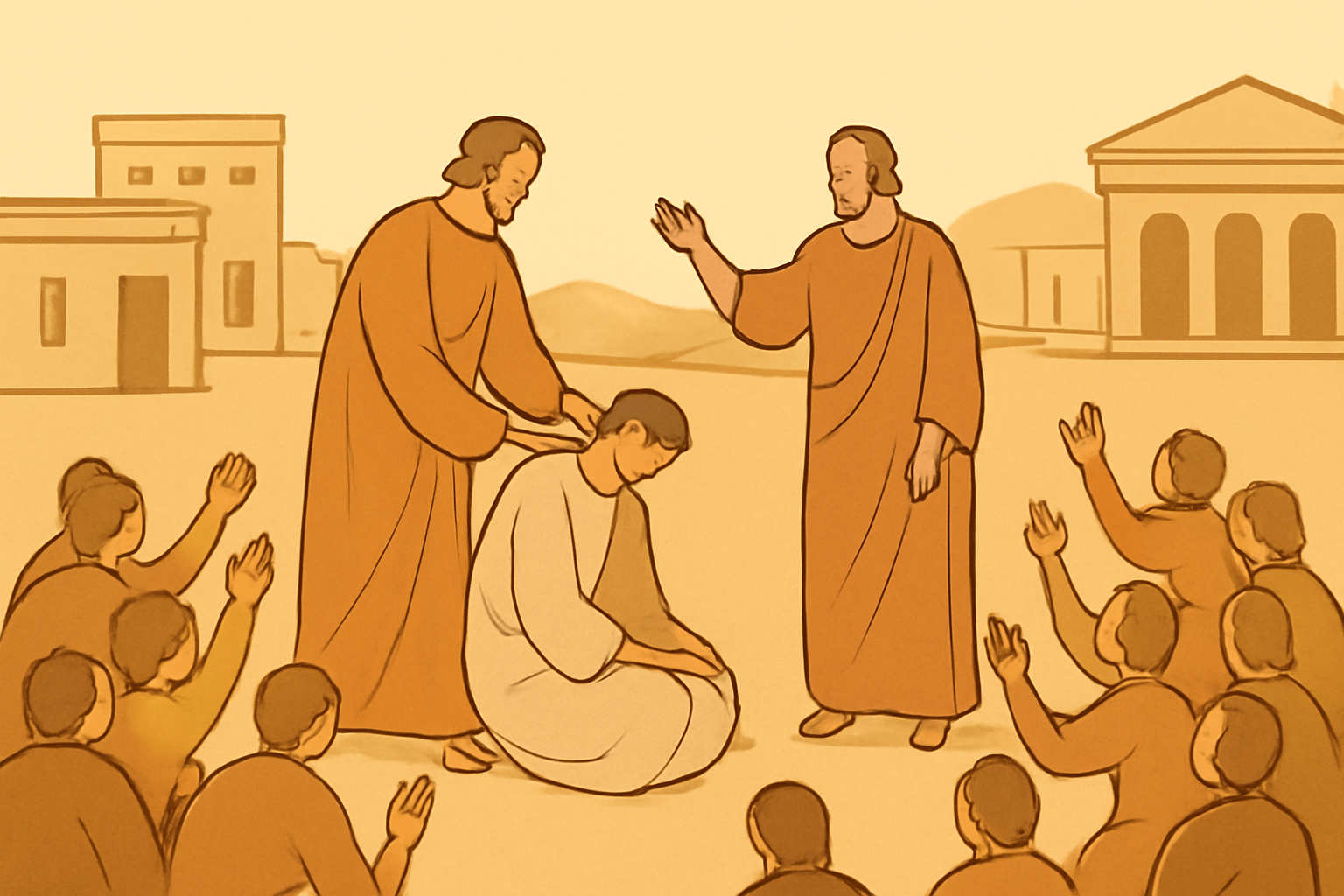 They identified Barnabas as Zeus and Paul as Hermes. This wasn’t random—Paul was called Hermes because he was the chief speaker, reflecting the cultural understanding of Hermes as the messenger god and divine orator.
The people of Lycaonia had a deeply ingrained worship tradition centered on Zeus and Hermes. Archaeological evidence reveals that Zeus was particularly venerated in this region. Their reaction stemmed from a local legend, recorded by the Roman poet Ovid in “Metamorphoses,” about Zeus and Hermes visiting the region disguised as mortals. When only one elderly couple showed hospitality to the disguised gods, the gods destroyed the inhospitable villagers while saving the kind couple. The Lystrans, not wanting to repeat their ancestors’ mistake, rushed to honor Paul and Barnabas with sacrificial garlands and bulls.
Paul and Barnabas were horrified by this misidentification. They tore their clothes—a Jewish sign of distress at blasphemy—and rushed into the crowd, insisting they were “only human” and preaching about the “living God” as opposed to the “worthless things” the people worshiped.
Paul’s Sermon at the Areopagus (Acts 17:16-34)
In Athens, Paul was disturbed by the city’s idolatry. Invited to speak at the Areopagus (Mars Hill), he used the altar inscription “To an Unknown God” as a rhetorical bridge to introduce the Christian God. This altar likely reflected Athenians’ caution about neglecting any deity.
Paul’s speech skillfully wove Greek concepts into Christian truth. He quoted the Greek poets Epimenides (“In him we live and move and have our being”) and Aratus (“We are his offspring”) to establish common ground. The Athenians listened until Paul mentioned resurrection—a concept alien to Greek thought, which generally viewed bodily resurrection as undesirable. This resulted in mixed reactions: some mocked him, others wanted to hear more, and a few became believers.
Artemis (Diana) of the Ephesians (Acts 19:23-41)
The confrontation in Ephesus centered on Artemis (Diana), whose massive temple was one of the Seven Wonders of the Ancient World.
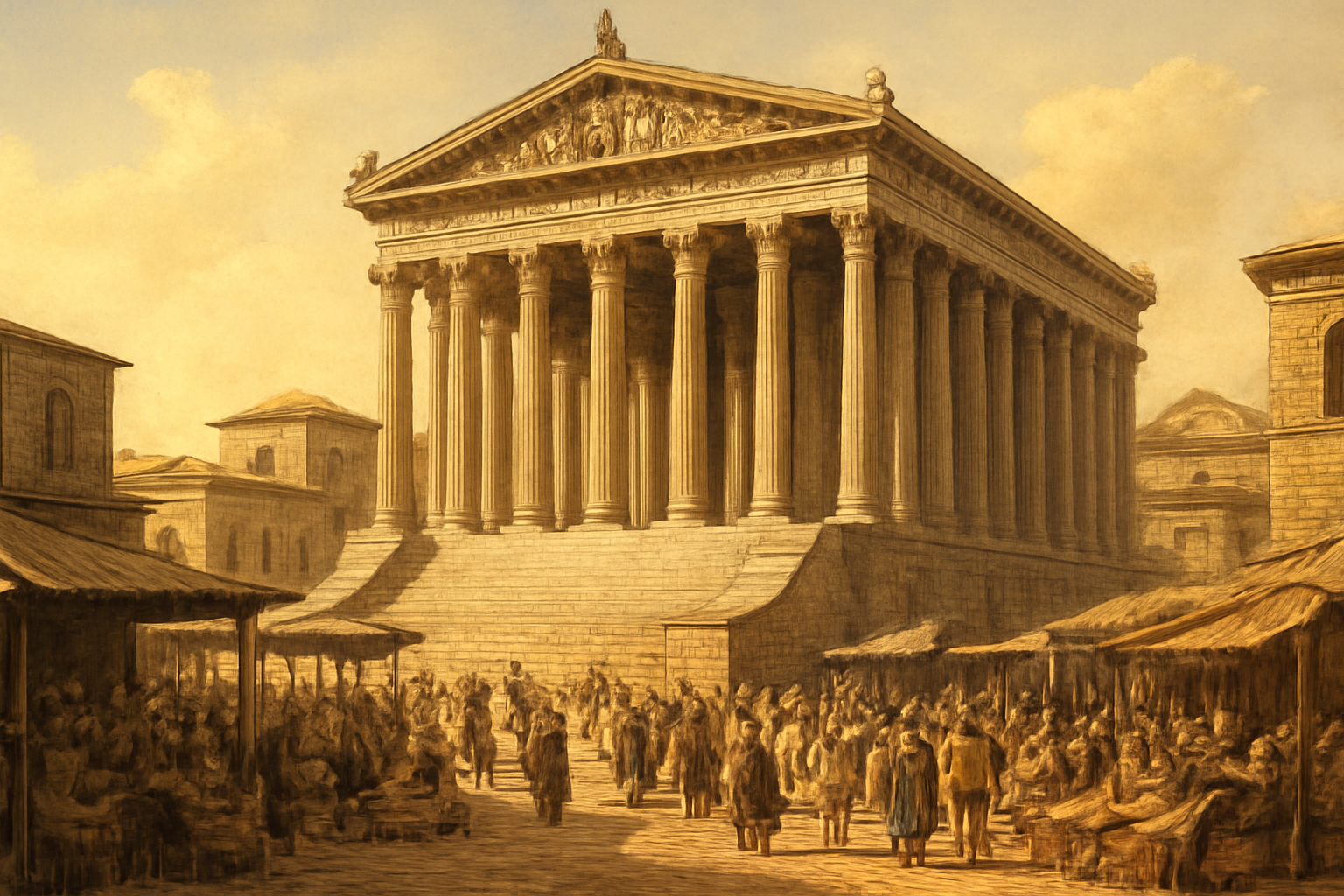 Artemis worship formed Ephesus’s religious, cultural, and economic foundation. The goddess was depicted with multiple breasts or egg-like appendages symbolizing fertility.
When Paul’s teaching threatened the idol-making industry, a silversmith named Demetrius incited a riot, claiming Paul insulted their goddess by saying “gods made with hands are not gods.” The economic motivation behind religious outrage is clear—Christianity threatened their livelihood.
The resulting two-hour chant of “Great is Artemis of the Ephesians!” reveals the passionate devotion to this cult. The city clerk eventually calmed the crowd by appealing to legal process rather than mob action.
Indirect References to Hermes in Paul’s Ministry
The Lystrans’ identification of Paul as Hermes provides insight into how Paul was perceived. As “chief speaker,” Paul embodied qualities associated with Hermes—eloquence, persuasiveness, and communication skill. Though his opponents claimed his speech was “contemptible,” his writings reveal sophisticated rhetoric.
This cultural lens shows how Greco-Roman audiences might have interpreted early Christian missionaries through familiar religious frameworks. Paul used this to his advantage, meeting people where they were culturally while transforming those same cultural concepts to communicate Christian truth.
Greek Philosophical Concepts and Mythological References in New Testament Theology
The ‘Unknown God’ and Greek Philosophical Theology
When Paul stood at the Areopagus in Athens, he cleverly used an altar inscription “To an Unknown God” as a bridge to introduce the Christian God. This famous altar wasn’t merely Paul’s invention—historical records confirm that such altars existed in ancient Athens. The Athenians, fearing they might have overlooked a deity and thus invite divine punishment, erected these altars as a religious safety net. Paul seized this cultural peculiarity as an evangelistic opportunity.
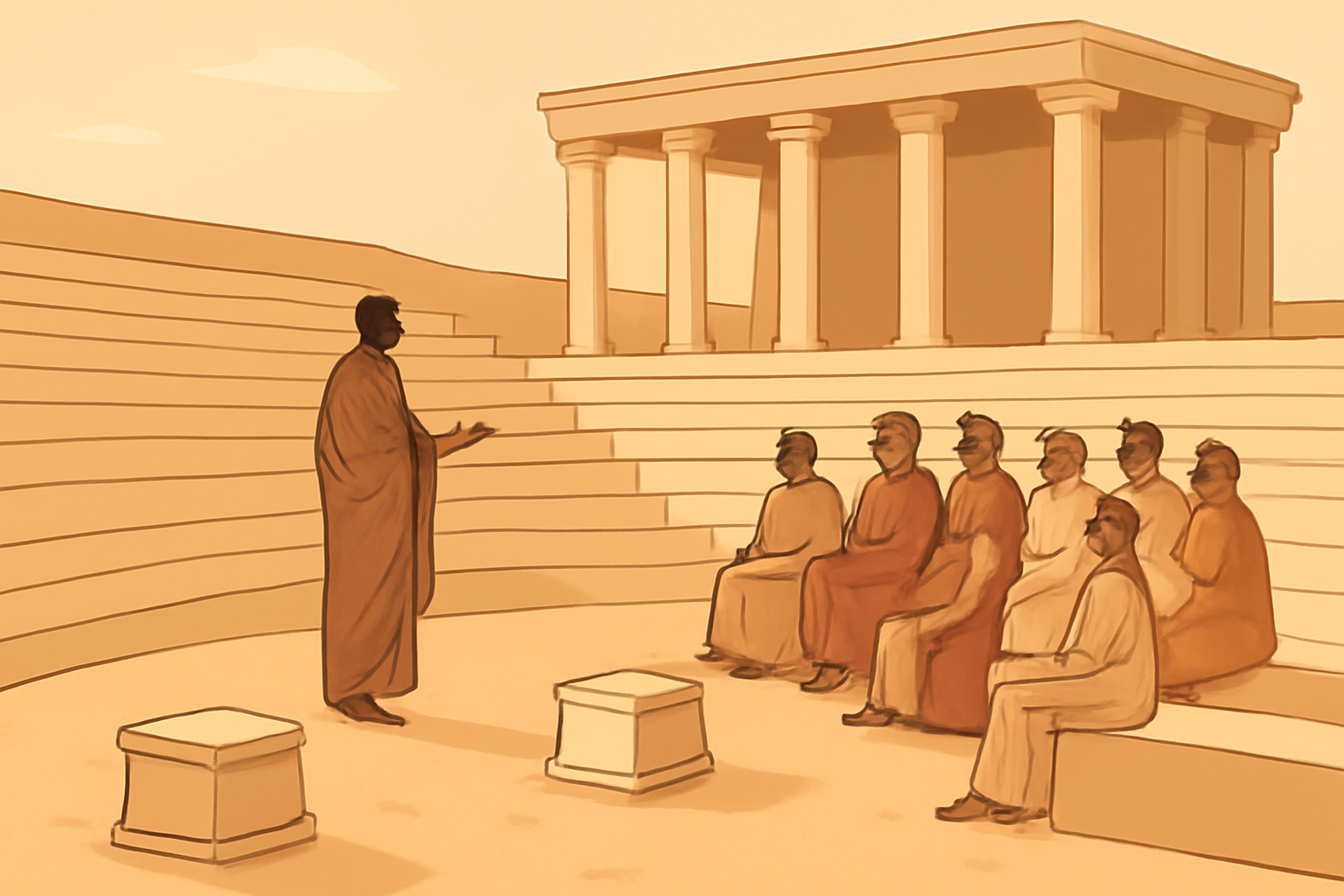
“What you worship as unknown, this I proclaim to you,” Paul declared, showcasing a remarkable cultural intelligence. He didn’t begin by condemning their polytheism but instead found common ground in their religious curiosity. Paul’s approach demonstrates strategic cultural engagement rather than confrontational tactics.
Paul’s description of God as the creator “who made the world and everything in it” and who “does not live in temples made by human hands” echoes Stoic philosophical concepts. The Stoics, unlike Epicureans, viewed divinity as immanent in creation—”in him we live and move and have our being.” Paul quotes their own philosophers, including Aratus and Epimenides, building bridges before introducing distinctly Christian ideas like resurrection.
Greek Heroes and the Son of God: Conceptual Parallels
Early critics of Christianity often accused believers of simply recycling Greek hero myths. On the surface, similarities exist—divine paternity, miraculous powers, death and return from the underworld—patterns seen in stories about Heracles, Asclepius, and others. However, early Christians worked hard to distinguish Jesus from these mythological heroes.
Unlike Greek heroes who achieved godhood through death (apotheosis), Jesus was presented as eternally divine yet fully human. The Greco-Roman religious context actually helps highlight these distinctions. While Greek heroes became gods, Jesus was God who became human—an inversion of the typical pattern.
Early Christian apologists like Justin Martyr acknowledged these superficial similarities while arguing for Christianity’s uniqueness.
 Rather than denying parallels, they suggested that Greek myths contained shadows of truth that found fulfillment in Christ. This approach neither rejected Greek culture wholesale nor uncritically embraced it.
Dionysos and Eucharistic Imagery
Some scholars have noted potential parallels between early Christian Eucharistic practices and Dionysian rituals. Both involve wine, symbolic consumption, and themes of death and rebirth. However, the New Testament writers took pains to distinguish Christian practices from mystery cult rituals.
The Eucharist developed primarily within Jewish frameworks—Passover meals and covenant ceremonies—rather than Dionysian ones. Jesus reinterpreted existing Jewish symbols rather than importing pagan concepts. Archaeological evidence from early Christian meeting places shows how believers navigated this cultural tension, maintaining Jewish roots while existing in Greco-Roman contexts.
 CASTIN-GRACE