Restoring Foundation #2 (Ephesians 6:12) For our struggle is not against flesh and blood, but against the rulers, against the powers, against the world forces of this darkness, against the spiritual forces of wickedness in the heavenly places.
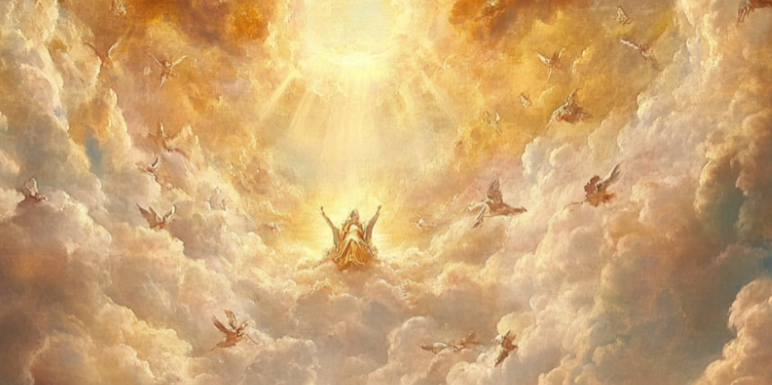
| Helel ben Shahar is a Hebrew phrase that translates to “Shining One, Son of the morning/dawn”. It is used in the Vulgate for Isaiah 14:12 and was later applied to Satan in Christian tradition. | |
| Original Language | Hebrew |
| Meaning | Shining One, Son of the morning/dawn |
| Biblical Reference | Isaiah 14:12 (Vulgate) |
| Associated Figure | Satan (in Christian tradition) |
Original Hebrew Phrase: The original Hebrew phrase for “Helel ben Shahar” is הֵילֵל בֶּן־שָׁחַר. This phrase is found in Isaiah 14:12. The Hebrew word הֵילֵל (helel) is pronounced “heylel”and derives from the root “halal,” meaning “to shine”. The complete phrase literally translates to “shining one, son of the morning” or “morning star, son of the morning”
Meaning and Etymology: The term Helel (הֵילֵל) means “shining one” or “light-bearer”. Ben Shahar means “son of the morning” or “son of the dawn”. The complete phrase vividly describes the morning star, which shines brightly before the sun rises.
Biblical Context: In Isaiah 14, the prophet Isaiah uses the phrase Helel ben Shahar in a taunt song against the king of Babylon. The passage describes the king’s arrogant ambition to ascend to heaven and make himself like God, only to be cast down to the realm of the dead. This imagery draws a poetic comparison between the proud king’s rise and fall and the celestial motion of the morning star, which appears brightly but then fades with the dawn.
Translation and Interpretation: The Septuagint, a Greek translation of the Hebrew Bible, renders Helel as Heōsphoros (Ἑωσφόρος), meaning “bringer of dawn”. The Latin Vulgate, a 4th-century translation of the Bible, translates Helel as “Lucifer,” which means “light-bringer” in Latin. This Latin translation is why “Lucifer” has been historically applied to the devil in Christian tradition.
Modern English translations of Isaiah 14:12 generally avoid “Lucifer” and instead use terms like “morning star,” “daystar,” “shining one,” or “shining star” to more accurately reflect the original Hebrew meaning and context. John Calvin and Martin Luther, prominent Protestant theologians, rejected the identification of Helel ben Shahar with Satan, asserting that the passage refers specifically to the king of Babylon. However, the metaphor of the morning star in Isaiah 14:12 has been widely interpreted in Christian writings as an allegory for Satan’s fall from heaven, particularly linking it with Luke 10 (“I saw Satan fall like lightning from heaven”).
“Ha-Satan” as a Title, Not a Name
The term “ha-Satan” originates from Hebrew and appears in the Hebrew Bible, where it signifies “the opposer” or “the adversary”. It is not initially presented as a proper name but rather as a title describing a function or role.
Meaning in Hebrew: The Hebrew term “ha-Satan” is a combination of “ha,” which means “the,” and “Satan,” which translates to “opposer,” “adversary,” or “accuser”. The Hebrew noun and verb “satan” can also have a non-technical meaning of “to stand opposed to someone as an adversary”. The pronunciation of “Satan” sounds like “saTahn”.
It is widely understood that “Satan” simply means “adversary” or “opposer” and was never intended to be a proper name for the Evil One. Instead, “ha-Satan” functions as a title meaning “The Adversary,” “The Accuser,” or “The Opposer”. This title is given to a figure in various biblical texts and is not a personal name. English translations often omit the “Ha,” inadvertently turning this Hebrew title into the name “Satan”.
Early Appearances in the Hebrew Bible: In the Hebrew Bible, “ha-Satan” first appears as a heavenly prosecutor, subordinate to Yahweh (God). This figure operates within the heavenly court, prosecuting the nation of Judah and testing the loyalty of Yahweh’s followers.
Instances of “Ha-Satan” in Scripture: The title “ha-Satan” is notably present in a few books of the Tanakh (Old Testament):
Book of Job: ”Ha-Satan” is a central figure in the book of Job, where he is depicted as one among the “sons of God” who present themselves before YHWH. In Job, “ha-Satan” challenges Job’s piety, suggesting that Job serves God only because he is blessed. YHWH grants “ha-Satan” permission to test Job, initially allowing him to afflict Job’s possessions and then his health, but with limitations. This interaction highlights “ha-Satan’s” role as an accuser and tester.
Book of Zechariah: In a vision of Zechariah, “ha-Satan” appears standing at the right hand of Joshua the high priest, acting as his accuser. The Angel of YHWH rebukes “ha-Satan” in this context.
Book of Numbers: An “Angel of YHWH” is described as an “adversary” (l’satan) against Balaam. Here, the angel opposes Balaam’s path, demonstrating that even a divine being can act as a “satan” or “opposer”. This illustrates the functional meaning of the term rather than a specific evil entity.
1 Chronicles: The word “Satan” is mentioned in 1 Chronicles 21:1.
Ambiguity and Misunderstanding :There is significant misunderstanding surrounding the word “satan,” as it has become the name of the Evil One, despite never being intended as such. The term simply means “adversary” or “opposer,” and even “very good people” like David and the Angel of YHWH were referred to as a “satan” in the Bible. The Hebrew word is not only a noun but can also function as a verb, meaning “to oppose” or “to be adversarial”.
Distinction from Christian Satan: In Jewish tradition, “ha-Satan” is generally seen as an agent of God, fulfilling a specific role within the divine court, rather than a malevolent, rebellious entity opposed to God. This contrasts with the common Christian understanding of Satan as the embodiment of pure evil and an arch-enemy of God. Jewish individuals do not typically view Satan as a rebelling angel, but rather as an angel doing God’s work. The popular cultural image of Satan with horns, pitchforks, and other demonic features is largely derived from Christian beliefs.
Lucifer or Helel ben Shahar
The term “Lucifer” originates from the Latin Vulgate translation of this Hebrew phrase in Isaiah 14:12. In Roman folklore, Lucifer, meaning “light-bringer” in Latin, was the name for the planet Venus and was sometimes personified as a male figure carrying a torch. The Septuagint, an ancient Greek translation of the Hebrew Bible, rendered Helel as Heōsphoros, which means “bringer of dawn”.
Helel ben Shahar (הֵילֵל בֶּן־שָׁחַר) is a Hebrew phrase found in Isaiah 14:12 that translates to “shining one, son of the morning” or “daystar, son of the dawn”. This phrase is most commonly understood as a reference to the planet Venus, the morning star. The Hebrew word Helel appears only once in the Hebrew Bible, specifically in Isaiah 14:12, within a prophecy against the king of Babylon.
Theological Interpretations and Evolution: In Christian theology, Lucifer is traditionally identified as a magnificent angel who fell from heaven due to pride and became known as Satan. This identification is deeply rooted in interpretations of biblical passages like Isaiah 14 and Ezekiel 28. The fall of Helel is interpreted as the fall of Satan in early texts such as the Life of Adam and Eve. According to this tradition, Satan, originally among God’s first light creatures, was cast down from heaven due to his arrogant pride.
Origen, an early Christian theologian, related Isaiah 14:12–13 to Jesus’ statement in Luke 10:18 (“I saw Satan fall like lightning from heaven”) by interpreting Helel as Satan, a view that became widespread in Christian theology. Passages in the New Testament (such as 2 Peter 2:4; Jude 6; Revelation 9:1; 12:9) and pseudepigrapha also contributed to the identification of Lucifer with Satan. Consequently, since the Middle Ages, Lucifer has become a common name for the devil.
However, modern English translations of Isaiah 14:12 generally avoid the name “Lucifer” and instead use phrases like “morning star,” “daystar,” or “shining one” to more accurately reflect the original Hebrew meaning and context. Protestant theologians John Calvin and Martin Luther both rejected the identification of Helel ben Shahar with Satan, asserting that the passage specifically refers to the king of Babylon. Despite this, the metaphor of the morning star in Isaiah 14:12 has been widely interpreted in Christian writings as an allegory for Satan’s fall from heaven.
Context in Isaiah 14: In Isaiah 14, the prophet Isaiah uses the phrase Helel ben Shahar in a taunt song directed at the king of Babylon. This passage describes the king’s ambitious desire to ascend to heaven, raise his throne above God’s stars, and make himself like the Most High, only to be brought down to the realm of the dead. This imagery draws a poetic comparison between the proud king’s rise and fall and the celestial motion of the morning star, which appears brightly but then fades with the dawn. While the passage primarily condemns a human ruler, its vivid and hyperbolic language has led to broader theological interpretations linking it to Satan’s fall due to pride.
Ezekiel 28 and Isaiah 14
| Ezekiel 28 (King of Tyre/Satan) | Isaiah 14 (King of Babylon/Lucifer) | |
|---|---|---|
| Primary Referent | King of Tyre | King of Babylon |
| Figurative Referent | Satan | Satan/Fallen Angel |
| Status/Origin | • Seal of perfection• Full of wisdom and perfect in beauty• Anointed guardian cherub• Established by God• Adorned with precious stones• Musical skill | • Morning star/Day star• Son of the dawn• Shining one• Exalted position, desired to be like God |
| Location | • Eden, the garden of God• Holy mountain of God• Walked among fiery stones | • Heaven• Above stars of God• Mount of the congregation• Heights of the clouds |
| Characteristics | • Blameless until iniquity found• Heart lifted up due to beauty• Wisdom corrupted by splendor• Filled with violence due to trade | • Sought to ascend to heaven• Desired to exalt throne above God’s stars• Aspired to be like the Most High• Weakened nations |
| Reasons for Downfall | • Iniquity found within• Pride due to beauty• Violence from abundant trade• Profaned sanctuaries | • Pride and arrogance• Desire to be like the Most High• Self-exaltation |
| Consequence of Downfall | • Cast as profane from God’s mountain• Destroyed, turned to ashes• Laid before kings• Became a horror | • Fallen from heaven• Cut down to the ground• Brought down to Sheol• Lowest depths of the Pit |
Primary Reference: The primary referent in Ezekiel 28 is the king of Tyre. Similarly, Isaiah 14 primarily refers to the king of Babylon. Both passages describe human rulers who were proud and oppressive. However, the language used in both texts often goes beyond what can be applied solely to human kings, suggesting a deeper, spiritual referent.
Figurative Reference: Many scholars interpret the descriptions in both Ezekiel 28 and Isaiah 14 as also referring to Satan or a fallen angel. In Ezekiel 28, the figure is seen as the spiritual power behind the king of Tyre, often identified as Satan. In Isaiah 14, the “Lucifer” figure is widely interpreted in Christian theology as Satan due to his arrogant pride and fall from heaven.
Status/Origin: In Ezekiel 28, the figure is described as the “seal of perfection, full of wisdom and perfect in beauty”. This being was “anointed as a guardian cherub” and adorned with various precious stones. His musical skill is also mentioned, with the workmanship of his timbrels and pipes prepared for him. The passage indicates this figure was established by God with great beauty, wisdom, adornment, and musical skill. Isaiah 14 depicts Lucifer as a “morning star” or “day star,” also referred to as the “shining one, son of the dawn”. This title suggests a position of great splendor and prominence. Medieval Latin later used “Lucifer” as a name for Satan, connecting the original context to the devil’s fall.
Location: Ezekiel 28 states that the figure was “in Eden, the garden of God” and “on the holy mount of God,” walking among “fiery stones”. This suggests a pristine and sacred location, even beyond an earthly king’s domain. Isaiah 14 speaks of the figure desiring to “ascend into heaven,” “exalt my throne above the stars of God,” and “sit on the mount of the congregation”. The ambition to “ascend above the heights of the clouds” further emphasizes a heavenly or divine aspiration.
Characteristics: The figure in Ezekiel 28 was “blameless in ways from the day was created till wickedness was found in”. His heart became proud due to his beauty, and his wisdom was corrupted for the sake of his splendor. He was also filled with violence through abundant trade.
In Isaiah 14, the figure is characterized by an overwhelming pride and ambition, stating, “I will be like the Most High”. This figure also weakened nations, displaying a destructive nature. The five “I will” statements (ascend into heaven, exalt his throne, sit on the mount, ascend above the clouds, be like the Most High) highlight his self-exaltation.
Reasons for Downfall: Ezekiel 28 explicitly states that “iniquity was found in you”. His heart was “lifted up because of beauty,” leading to corruption of wisdom due to splendor, and violence from widespread trade. This indicates an internal origin for his downfall.
Isaiah 14 points to pride and the desire to be “like the Most High” as the reason for Lucifer’s fall. The aspiration to ascend above God’s authority led to his ultimate demise.
Consequence of Downfall: Ezekiel 28 describes the figure being “driven in disgrace from the mount of God” and expelled from the fiery stones. He was cast down as a profane thing, destroyed, and turned to ashes upon the earth, becoming a horror.
Isaiah 14 states that Lucifer has “fallen from heaven” and is “cut down to the ground”. The consequence is being brought “down to Sheol, to the lowest depths of the Pit”.
Luke 10:18, Jesus refers to the title “Satan”, the entity noted in Ezekiel 28 and Isaiah 14.

 CASTIN-GRACE